


Healing Sessions
Past-Life Regression: Finding Spiritual Peace in a Simple Japanese Past Life
Past-Life Regression: Finding Spiritual Peace in a Simple Japanese Past Life
ANOTHER STORY: VEILED IN THE PAST
Does revisiting past lives genuinely facilitate a client’s spiritual transformation in their present life? Let’s explore this together.
This is not the second part of the quantum hypnosis session involving the “Eastern Tea Blossom,” but rather the experience of a completely different client. However, both of them arrived with the exact same inquiry, and their past-life memories felt like pieces of a larger puzzle, both heavily steeped in a traditional Japanese aesthetic. Therefore, I decided to share this story as a natural continuation.
The setting was Japan, likely around the 17th or 18th century—not too ancient.
The regression began with the imagery of a traditional Japanese wooden house. It was small, humble, and almost entirely devoid of furniture. The wooden beams and pillars were dark and polished, though it seemed this deep hue came from years of being coated in soot rather than the wood itself. A young woman was doing laundry behind the house. While it wasn’t a rural wilderness, the cottage appeared to sit quietly on the outskirts of a bustling town. Right behind the house stood a vibrant green bamboo grove, accompanied by the gentle sound of trickling water. Looking up, she watched the blue sky blend seamlessly with the verdant canopy, listening to the birds sing, enveloped in a profound sense of peace.

This domestic routine was her everyday life. Although it required physical effort, she felt no fatigue; instead, she found immense joy in the present moment and the space around her. Her hair was swept up in a traditional Japanese style, and her garments were dark and simple, typical of a working-class family. Though her facial features were not starkly defined, she radiated a remarkably pure, innocent aura. She was a soul of utter simplicity, free from calculation or overthinking. Occasionally, she would carry a basket into town to gather supplies. Even though she could sense the crowded, noisy streets, amusingly, her vision captured only the sky and the leaves—as if whenever she stepped outside, she only looked upward, completely detached from the chaos of the mundane world.
Her husband was a samurai swordsman. His hair was tied high, and though the exact style was unclear, his forehead was broad and prominent. Dressed in dark attire, he always carried his blade. His duties frequently took him away from home. In her eyes, he was a deeply talented and charismatic man. She couldn’t quite understand why their family remained so poor, given that a skilled swordsman typically enjoyed a more comfortable life than a peasant, but she didn’t care about material wealth at all. It was clear that her husband was a man of immense integrity; he accepted only the stipend from his master and refused to engage in anything driven by greed.
Their poverty never burdened her. Her entire existence revolved around tending to their home, even though there was barely anything in it—cleaning, washing, and cooking. Every single day followed the exact same pattern, yet she remained consistently cheerful, discovering immense joy in these simple tasks without a single complaint. If you can picture the ultimate devotion of a traditional Japanese woman caring for her husband, she embodied it perfectly. She nurtured him with genuine, heartfelt joy, attending to every meticulous detail as if it were her natural duty, her heart anchored in absolute peace. To her, her husband was her entire universe.
There was one specific image during the hypnotherapy session that deeply moved me: They were so poor that when someone gifted them a beautiful piece of Mochi, they would share it, cutting the tiny traditional pastry precisely in half so they could both savor it. Yet, they smiled with pure happiness. They lived in complete harmony within their modest home, without children.
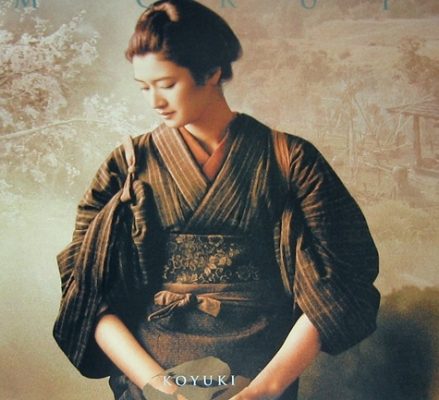
Until one day, while they were still young and far from middle age, she was found holding her husband, weeping in agonizing grief. He had succumbed to a fatal injury. Because he was her entire world, she passed away shortly after, her heart utterly broken by sorrow. As her soul reflected on that previous incarnation, she felt a profound sense of regret for how fleeting their time together had been, when they had always dreamed of growing old side by side. She simply had no desire to anchor herself to a physical life without him.
When I asked her higher self about the spiritual purpose of that lifetime, the insight was beautiful: It showed that a soul can experience genuine peace and spiritual renewal even through simple, repetitive tasks and a minimalist lifestyle. While she loved her husband deeply and nurtured him with instinctive affection, she also genuinely loved and took pride in her domestic chores—not out of societal obligation, but because she found a sacred joy within them.
Returning to the client in her present life, it turns out she absolutely detests domestic work because she cannot stand monotony and repetition. She usually avoids spending time on tasks she considers “too small and mundane,” believing that such a lifestyle is inherently boring. She was profoundly astonished by her own past-life recall, exclaiming, “Oh, I never expected this! It was so peaceful. Just like that, family life can be so incredibly joyful!”
A while later, when we crossed paths again, she leaned in and whispered with a smile, “Now, even if I had to scrub the toilet all day, I would still appreciate it and do it with genuine joy.”
I choose to leave this soul journey right here without further commentary, allowing each of you to sit with whatever message resonates with your own path.
Sending you much light and love!
(Please follow the first part of the ‘Love Songs for Beauties’ series here.


